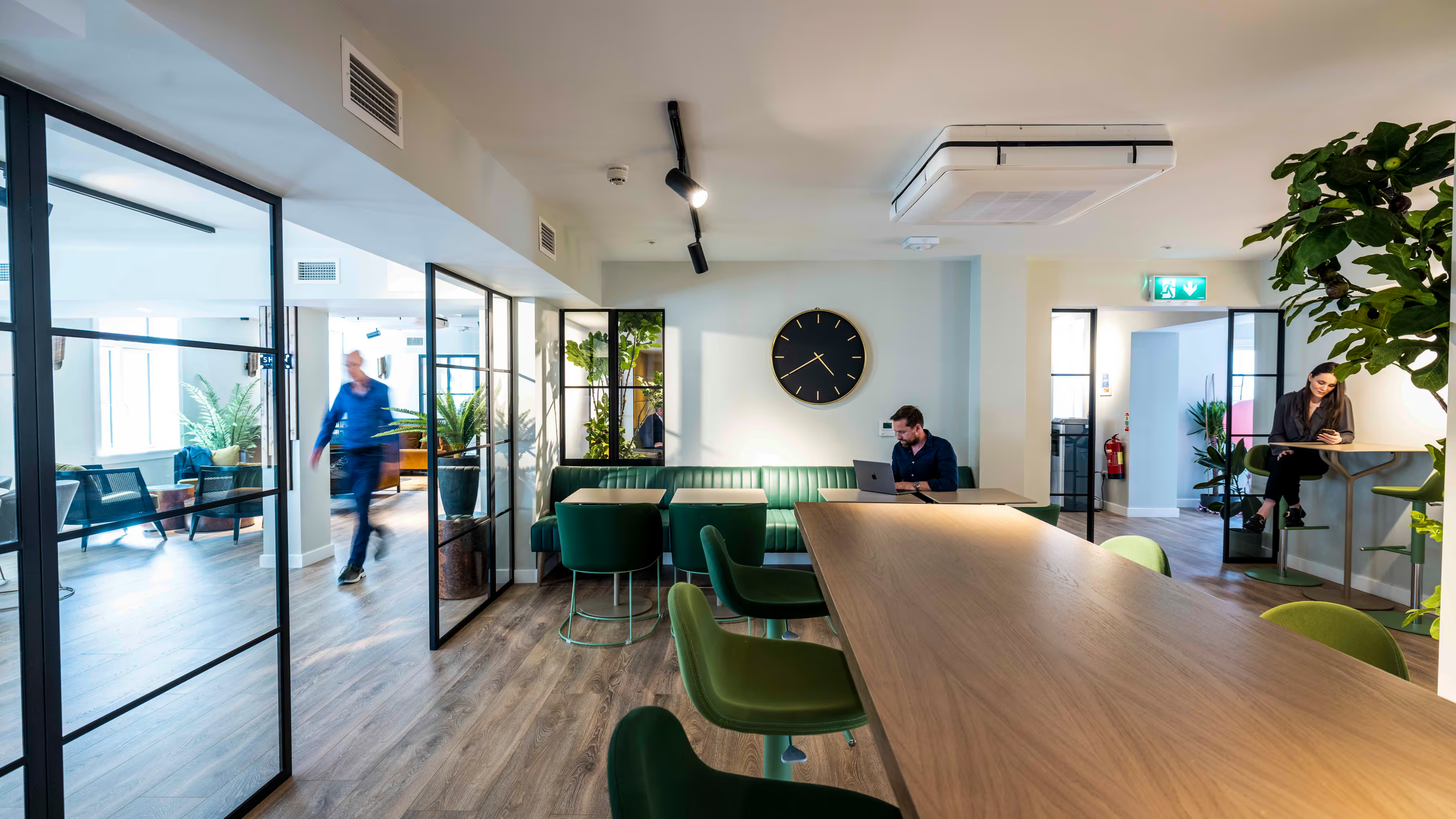

The way Dublin does business has changed and the office hasn't caught up everywhere. For years, companies had two real choices: sign a long lease and commit or go remote and lose the benefits of shared space. In 2026, a third option has moved into the mainstream — flexible office space that adapts to how teams actually work.
Hybrid working is now the default for a large share of Dublin employers and that shift has changed what an office is for. Businesses aren't just looking for desks; they want flexibility, a professional environment, room to collaborate, genuine convenience and clear value for money. So what does the modern Dublin office actually need to provide?
The Rise of Flexible Offices in Dublin
.jpeg)
Flexible office space Dublin demand has been building steadily and the numbers back it up. According to CBRE Ireland's 2026 flexible office market research, flex space now accounts for roughly 3.2% of Dublin's total office stock, up from 2.5% previously, with prime flexible offices running at occupancy levels of around 90%. For context, CBRE notes that London's flex penetration sits closer to 12%, suggesting Dublin still has room to grow.
That growth isn't happening in isolation. Several forces are pushing businesses of every size toward flexible offices Dublin operators provide changing employee expectations around workspace quality, hybrid working reducing the need for a permanent desk per person, ongoing economic uncertainty that makes long capital commitments harder to justify and growth and downsizing cycles that require office space to move with headcount rather than against it. Add to that a reduced appetite for long leases with heavy fit-out costs and rising demand for furnished, ready-to-use space that removes months of setup time.
None of this means traditional leasing is disappearing, but for a growing segment of the market — from start-ups to professional services firms — flexible workspace Dublin providers now offer a serious, mainstream alternative rather than a stopgap.
Hybrid Working Is Changing What Businesses Need From an Office
The office hasn't become less important. It's become important for different reasons.
Where a desk was once simply somewhere to sit for eight hours, the office is now a space for collaboration, client meetings, team building, focused project work and company culture. Video calls can happen from a kitchen table. What can't happen from a kitchen table is the spontaneous conversation, in-person client meeting or team problem-solving session that still drives most businesses forward. That's why many companies no longer need a permanent desk for every employee, every day — instead, they need a space that works when the whole team is in and still works when only a handful of people show up.
Put simply: the office is becoming less about where people have to work and more about where people want to work. That shift explains much of the movement toward serviced offices Dublin businesses are choosing over traditional leases — flexible formats are built around this pattern of variable, purpose-driven use, rather than assuming constant full occupancy.
Five Flexible Office Trends Shaping Dublin in 2026
1. More demand for private flexible offices. Open-plan coworking still suits solo founders and very early-stage teams. But as businesses grow, many want the privacy of their own office — for confidential client work and a stronger sense of identity — without giving up the flexible terms that drew them to serviced offices in the first place.
2. Offices designed around collaboration. Meeting rooms, breakout spaces and communal areas are no longer an afterthought. Businesses are choosing workspace based on how well it supports the moments that benefit from being in person: workshops, client presentations and cross-team collaboration.
3. Premium locations matter more. As office attendance becomes a choice rather than an obligation, location has to earn that choice. A well-located, premium office space Dublin address does real work for recruitment, client perception and convenience — it's one reason people are willing to come in at all.
4. Businesses want all-inclusive workspace. Predictable monthly costs are increasingly attractive. Rather than managing furniture, utilities, cleaning and maintenance separately, businesses are choosing managed office Dublin solutions where all of this is bundled into one transparent fee.
5. Flexibility is becoming a strategic tool. Flexible workspace is no longer just about renting desks month to month. Businesses are using it strategically — to trial a new market, scale a team quickly, right-size after a restructure or bridge the gap between funding rounds — without the constraints of a long lease.
Why Dublin 2 Remains a Strong Choice for Businesses
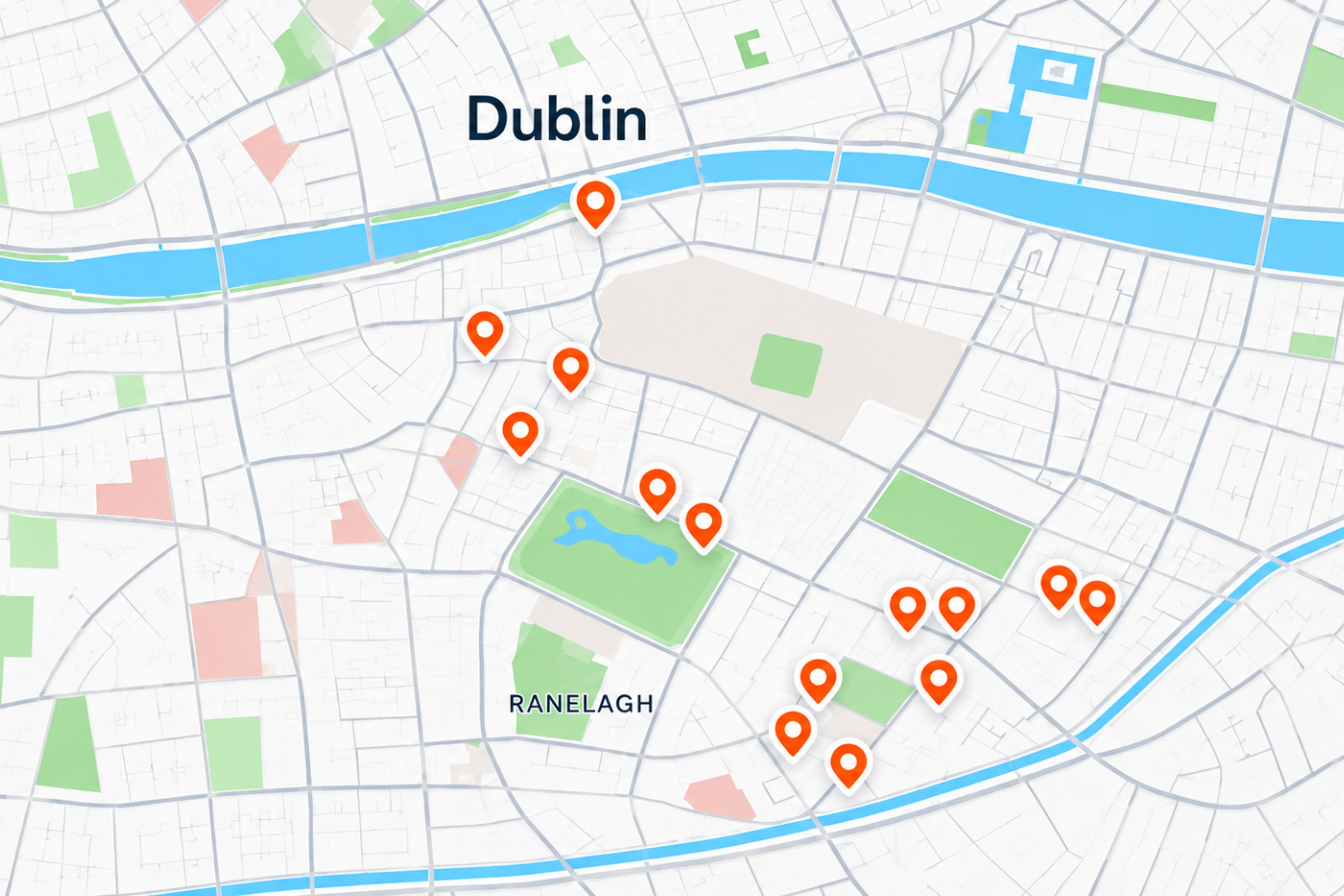
Location decisions have become more deliberate, not less. When office attendance is optional, where that office sits has to justify the trip — and Dublin 2 continues to do exactly that.
The area offers a central position, easy access to public transport and proximity to the restaurants and cafés that make a working day easier. For client-facing businesses, a Dublin 2 office space also carries a professional image that supports recruitment and first impressions in ways that harder-to-reach locations struggle to match.
That's part of why Dublin 2 remains one of the most sought-after addresses among flexible office space Dublin businesses actively compare. Streets like St Stephen's Green, Pembroke Street, Fitzwilliam Street, Mount Street, Dame Lane, Drury Street and Clarendon Street sit within walking distance of Grafton Street, the Grand Canal and Dublin's core business district — combining a premium setting with genuine practicality for staff and visiting clients.
What Should You Look for in a Flexible Office in Dublin?
If you're actively comparing providers, it helps to work from a consistent checklist rather than judging on first impressions alone:
- Location — genuinely convenient for your team and clients, not just close on a map
- Office size and scalability — fits current headcount, with room to grow within the same building or portfolio
- Flexibility of terms — can you scale up, down, or leave without excessive notice?
- Technology — connectivity reliable enough for video calls and daily operations
- Meeting rooms, reception and support — available, well-equipped and staffed when you need them
- Kitchen and breakout areas — proper space to take a break or have an informal conversation
- Security and accessibility — appropriate access control, and a building that works for all staff and visitors
- Transparent pricing — genuinely all-inclusive, with no hidden extras
- Quality of fit-out — reflects how you want clients to see your business
Weighing these factors consistently across providers makes it easier to compare serviced office Dublin options on substance rather than presentation alone.
How Pembr Fits the New Dublin Office Model
Pembr is one example of how flexible workspace providers are adapting to this shift. Rather than a single format, Pembr offers options designed around different stages of business — private offices, small and medium suites, headquarters-scale space, virtual offices and meeting rooms — all on flexible terms, furnished and move-in ready, with all-inclusive monthly pricing across a portfolio concentrated in Dublin 2.
The point isn't that any one provider suits every business. It's that this model — flexible terms, inclusive pricing and premium Dublin 2 locations — reflects exactly the kind of workspace more Dublin businesses are now looking for.
.jpeg)
The Future of Flexible Office Space in Dublin
The direction of travel is fairly clear. Dublin's office market is likely to keep moving toward greater flexibility, more choice and higher expectations of workplace quality. Businesses are not abandoning offices — they are changing what they expect from them.
Going forward, the offices that succeed will need to combine flexibility, location, reliable technology, a genuinely good employee experience and a level of professionalism that supports the business using the space. Providers and occupiers that treat these as separate boxes to tick, rather than one connected offering, are likely to fall behind.
Conclusion
Dublin's flexible office market in 2026 reflects a broader rethink of what workspace is for. Hybrid working has turned the office from a default requirement into a deliberate choice, and businesses are responding by prioritising flexible terms, collaborative design, premium locations and predictable, all-inclusive costs over long-term commitments. For companies weighing their next move, the advantage of flexible workspace lies less in cutting costs and more in gaining control — over space, terms and how the business grows.
If you're considering a flexible office in Dublin, explore Pembr's range of private offices, flexible workspaces and meeting rooms across Dublin 2, or get in touch to arrange a viewing.
FAQs
What is a flexible office in Dublin? A flexible office is a fully furnished workspace available on short or adaptable terms, typically including utilities, internet, cleaning and maintenance in one monthly fee. It suits businesses that want a professional office without the long-term commitment or setup costs of a traditional lease.
How much does flexible office space in Dublin cost? Pricing varies by location, size and inclusions, so it's best confirmed directly with providers. Most flexible offices use all-inclusive monthly pricing covering utilities, internet and maintenance, making costs more predictable than a traditional lease with separate bills.
What are the benefits of a flexible office compared with a traditional lease? Flexible offices offer shorter commitments, lower upfront costs, included furniture and utilities, and the ability to scale space up or down as the business changes. Traditional leases can suit businesses with stable, long-term needs, but usually require more capital and administrative management.
Is Dublin 2 a good location for an office? Yes. Dublin 2 offers a central position, strong public transport links, proximity to clients and business networks, and access to restaurants and amenities. It remains one of Dublin's most in-demand areas for businesses that value a premium, well-connected address.
Are flexible offices suitable for growing businesses? Yes. Flexible terms allow businesses to add desks, move to a larger office, or adjust their footprint without renegotiating a long lease. This makes flexible workspace a practical option for start-ups and scale-ups navigating uncertain or fast-changing headcount.