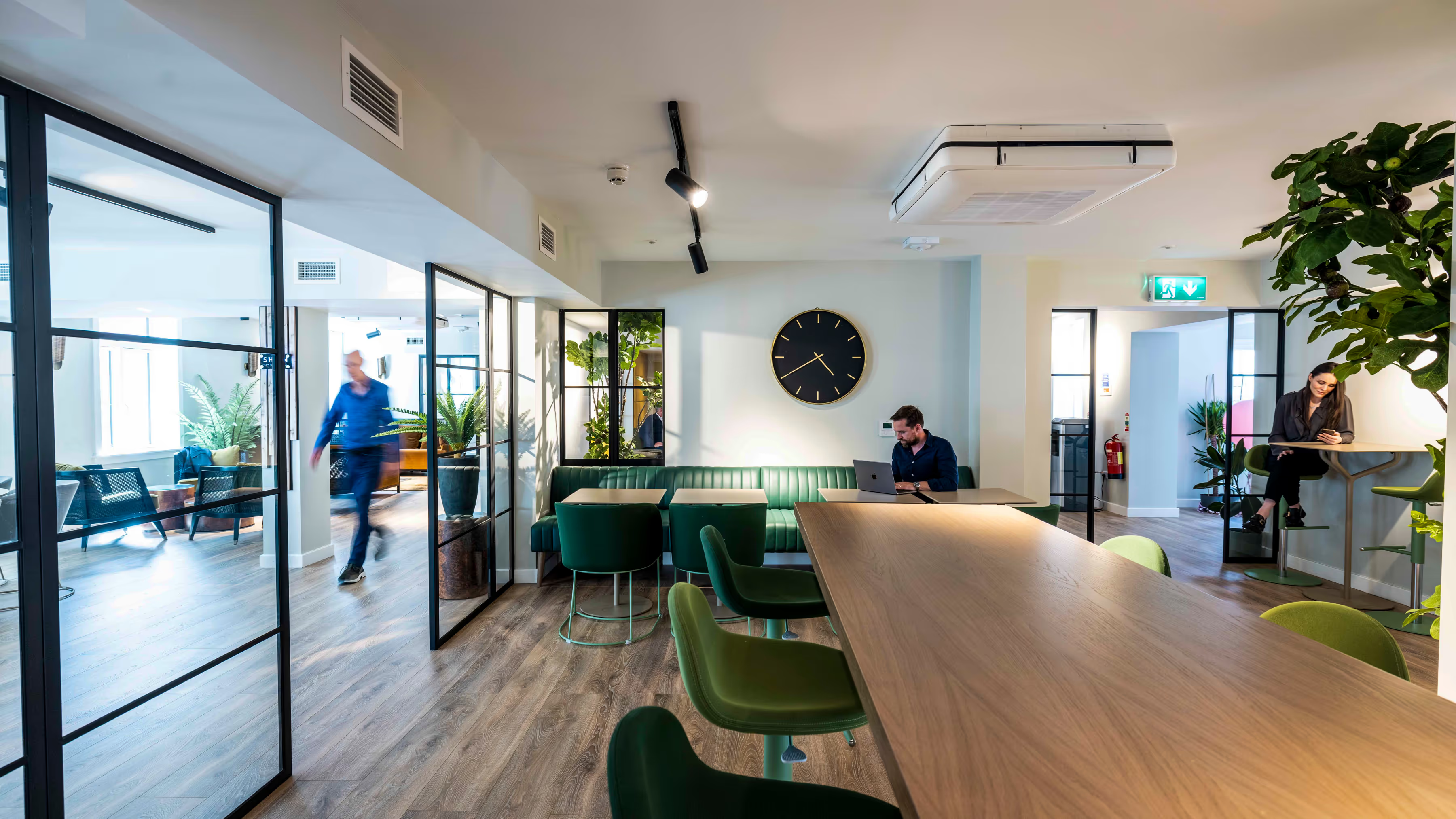
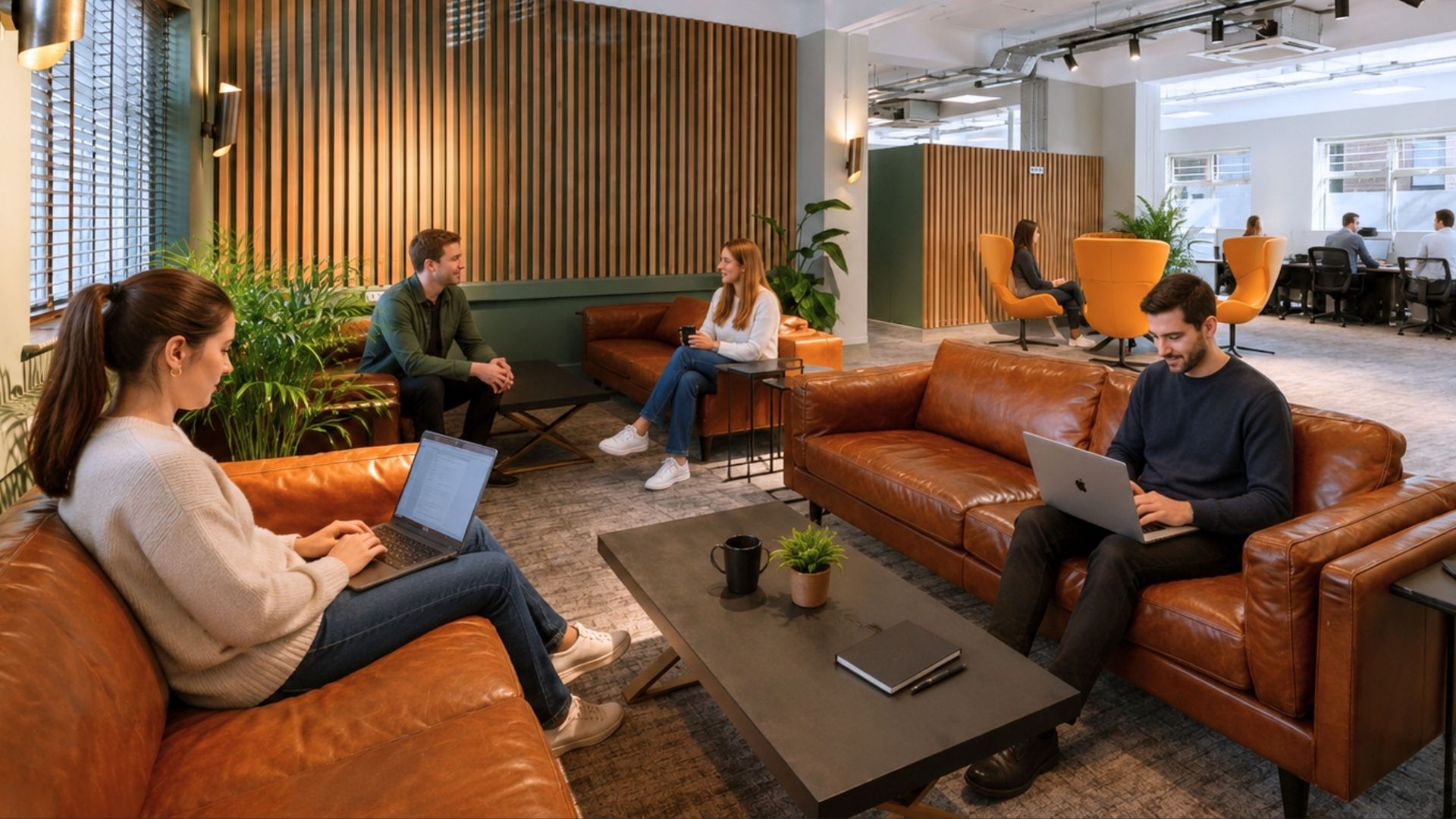
When Is It Time to Upgrade Your HQ?
There's usually a moment when it becomes obvious your office isn't working anymore. Meeting rooms are booked out days in advance. New starters are sharing desks. Client visits happen in the nearest café because there's nowhere private to sit down with them. None of these things are disasters on their own, but together they start to slow the business down.
Twenty-five employees tends to be the point where this shift happens. Below that, most teams can get by in a fairly standard office — a few desks, a small meeting room, a kitchen. Above it, the requirements change shape. You're not just adding desks anymore; you need dedicated space for leadership, room for multiple meetings to run at once, and somewhere that can host clients without embarrassment. That's the difference between an office and a headquarters.
Dublin's commercial property market makes this decision more pressing than it might have been a few years ago. Vacancy in Dublin 2, the city's traditional business core, has been falling steadily and is now close to single figures, while flexible and serviced space continues to absorb demand from companies that don't want to commit to a long lease before they know exactly how much room they'll need. If a move is somewhere on your roadmap, it's worth starting to plan before the choice narrows further.
How Much Space Does a 25+ Person Team Need?
.jpeg)
Headcount is the obvious starting point, but it's a poor way to size an office on its own. A useful HQ needs several categories of space working together, not just desks in a row.
Desks. The baseline, but allow for hybrid patterns rather than assuming every seat is full every day. Most growing companies now plan for somewhere between 0.6 and 0.8 desks per employee, adjusted for how often the team is actually in.
Meeting rooms. A 25-person office generally needs more than one meeting room and they should vary in size, a small room for one-to-ones, a mid-size room for team catch-ups and access to something larger for client pitches or all-hands.
Breakout and collaboration areas. Informal space where people can work outside their desk, have a quick conversation or take a call without booking a room.
Reception and client-facing space. Once you're bringing clients or candidates into the office regularly, a proper reception matters. First impressions are formed in the first thirty seconds and a cramped or chaotic entrance undermines everything else about the business.
Storage and practical space. IT equipment, stationery, filing, coats - unglamorous, but the lack of it is the first thing people notice when it's missing.
The point of listing all this out is simple: two companies with the same headcount can need very different offices, depending on how they work. A sales-heavy business needs more meeting rooms and a stronger reception. An engineering team might need more quiet focus space and less of everything else. Headcount tells you the floor, not the plan.
Location Matters More Than You Think
It's tempting to treat location as a secondary consideration once the space itself checks out, but for a headquarters it deserves equal weight.
Start with accessibility. Can most of your team get there without a long or awkward commute? Dublin 2 remains the address most businesses gravitate toward, largely because it sits within easy reach of the Luas, DART and the main bus routes, which matters when your team is drawn from all over the city and beyond.
Proximity to clients and to other businesses in your sector also counts for more than people expect. Being a short walk from the companies you work with, pitch to or partner with removes friction from day-to-day business and a central address still signals something about how established a company is.
There's also a recruitment angle that's easy to underrate. Candidates weigh commute and location heavily when comparing job offers, particularly in a competitive hiring market. A headquarters in a well-connected, recognisable part of Dublin can be a genuine advantage when you're trying to attract people away from equally strong competitors.
Think Beyond Desks: Planning Your HQ
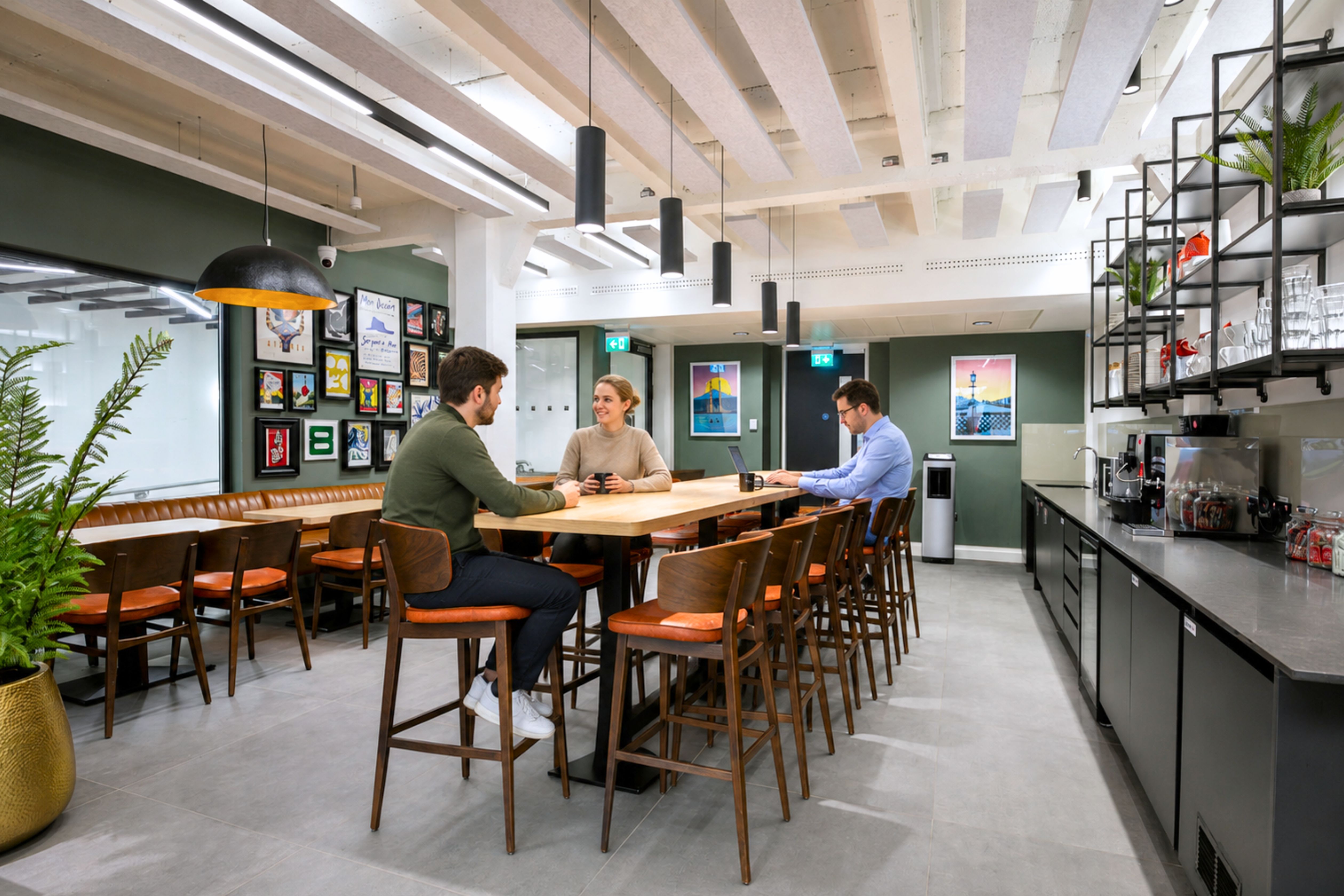
Once the headline numbers are agreed, the real planning work is in how the space is divided. A good HQ layout usually includes:
- Private offices for leadership or teams that need consistent quiet
- Open-plan workspace for the bulk of the team
- Meeting rooms of varying sizes
- Collaboration areas for informal work and cross-team projects
- Kitchen and breakout space where people can properly step away from their desks
- Flexible zones that can be repurposed as the company changes today's overflow meeting space might be next year's fourth desk cluster
The mistake many growing businesses make is designing for the team they have today rather than the team they'll have in eighteen months. A layout with some built-in flexibility avoids a second, disruptive fit-out only a year or two after moving in.
What to Consider When It Comes to Fit-Out
.jpeg)
Fit-out is where a headquarters starts to feel like a headquarters rather than a generic rented floor. A few areas are worth particular attention.
Furniture should suit how people actually work, not just look good in photos. Proper desks, decent chairs and enough variety to support both focused work and casual meetings.
Lighting affects mood and energy more than most people credit. Natural light where possible and layered artificial lighting elsewhere, makes a real difference to how a space feels by 4pm on a Tuesday.
Technology and connectivity are non-negotiable for a modern HQ — reliable, fast, business-grade fibre optic broadband and Wi-Fi, video conferencing set up properly in every meeting room and enough power and data points that nobody's hunting for a socket.
Branding turns a rented floor into your company's space. Colours, signage and small touches around the office reinforce identity for staff and visitors alike.
Acoustics and privacy are often overlooked until they become a problem. Open plan space needs enough separation that confidential conversations and focused work aren't constantly interrupted.
Done well, fit-out is what makes an office feel like the company's home rather than a landlord's building with your logo on the door.
Why Flexibility Is Important for Growing Businesses
A headquarters signed for ten or fifteen years used to be a mark of stability. For a growing business today, it's more often a liability. Headcount changes, hybrid working patterns shift, and expansion plans rarely follow a straight line — a rigid, long-term lease makes it expensive to adapt to any of it. This is where flexible or managed office models earn their appeal. Shorter, more adaptable terms mean a company can scale desk numbers up or down as the business changes, without renegotiating a lease every time. It also removes a layer of long-term financial commitment at exactly the stage when a business needs to keep its options open. The broader Dublin market has been moving in this direction too, with managed and flexible operators taking on more space as companies weigh the appeal of a strong central address against the risk of overcommitting to fixed square footage. An HQ that can evolve with the business, rather than boxing it in, tends to age far better than one chosen purely on today's headcount.
What to Expect From PEMBR HQ Office
PEMBR's HQ offices are built specifically for teams of 25 or more who've outgrown a standard office but don't want the overhead of managing a building themselves. That means fully fitted, professionally managed space across central Dublin locations — many in Georgian buildings around St Stephen's Green and the surrounding business district — with meeting rooms, collaboration areas and reception all included as standard. Everything runs on a single, transparent monthly fee, so there's no separate budgeting for cleaning, maintenance, IT or day-to-day management. Locations sit close to the Luas, DART and main bus routes, giving teams an easy commute and clients an easy visit. And because terms are flexible rather than locked in for a decade, an HQ office with PEMBR can grow or adjust alongside the business, without the risk of paying for space you no longer need. Pembr's newest HQ office, 16 St. Stephen's Green, is coming soon - a restored building on St. Stephen's Green with HQ-sized private offices (26+ desks), meeting rooms and an on-site cafe.
Questions to Ask Before Choosing Your Dublin HQ
Before signing anything, it's worth running through a short list of questions:
- Can the space comfortably accommodate our current team, not just fit them in?
- Is there room to expand if we grow faster than expected?
- Is the location genuinely convenient for our people and our clients?
- What's actually included in the fit-out and what will we need to add ourselves?
- Are there enough meeting rooms, of the right sizes, for how we work?
- How much day-to-day management will the space require from us?
- Does the office represent the brand the way we want it to?
A clear answer to each of these does more to narrow down the right HQ than any floor plan on its own.
Choosing an HQ Is About More Than Finding Enough Desks
The right headquarters supports the way your people work, gives clients and candidates a strong first impression and leaves room for the business to keep growing. Getting it right means looking past square footage and thinking about location, layout, fit-out and flexibility together. If you're a growing business searching for professionally managed HQ office space in Dublin, PEMBR offers fully fitted, flexible headquarters across some of the city's best-connected locations.
Get in touch or schedule a viewing to find the right space for your team