
Why Working From the Office or Hybrid Can Be Better Than Working From Home
Working from home changed the way we think about work. For many people, the flexibility is hard to beat. No commute, fewer distractions from the office and the freedom to structure the day differently can all make remote working a great option. But there is another side to the conversation. For businesses, particularly growing teams, being completely remote can make some things harder. Building relationships, sharing ideas, learning from colleagues and creating a strong company culture are not always as easy through a screen. That is why the conversation is increasingly moving away from working from home vs office and towards something more practical: how can businesses combine the best parts of both? For many companies, a well-designed hybrid working model can offer exactly that. Employees get flexibility when they need it, while an office provides somewhere to collaborate, meet clients, build relationships and bring the team together. And for businesses looking for office space in Dublin, that does not necessarily mean signing a long traditional lease and committing to desks that sit empty several days a week.
Working From Home Has Benefits, But It Isn't Perfect
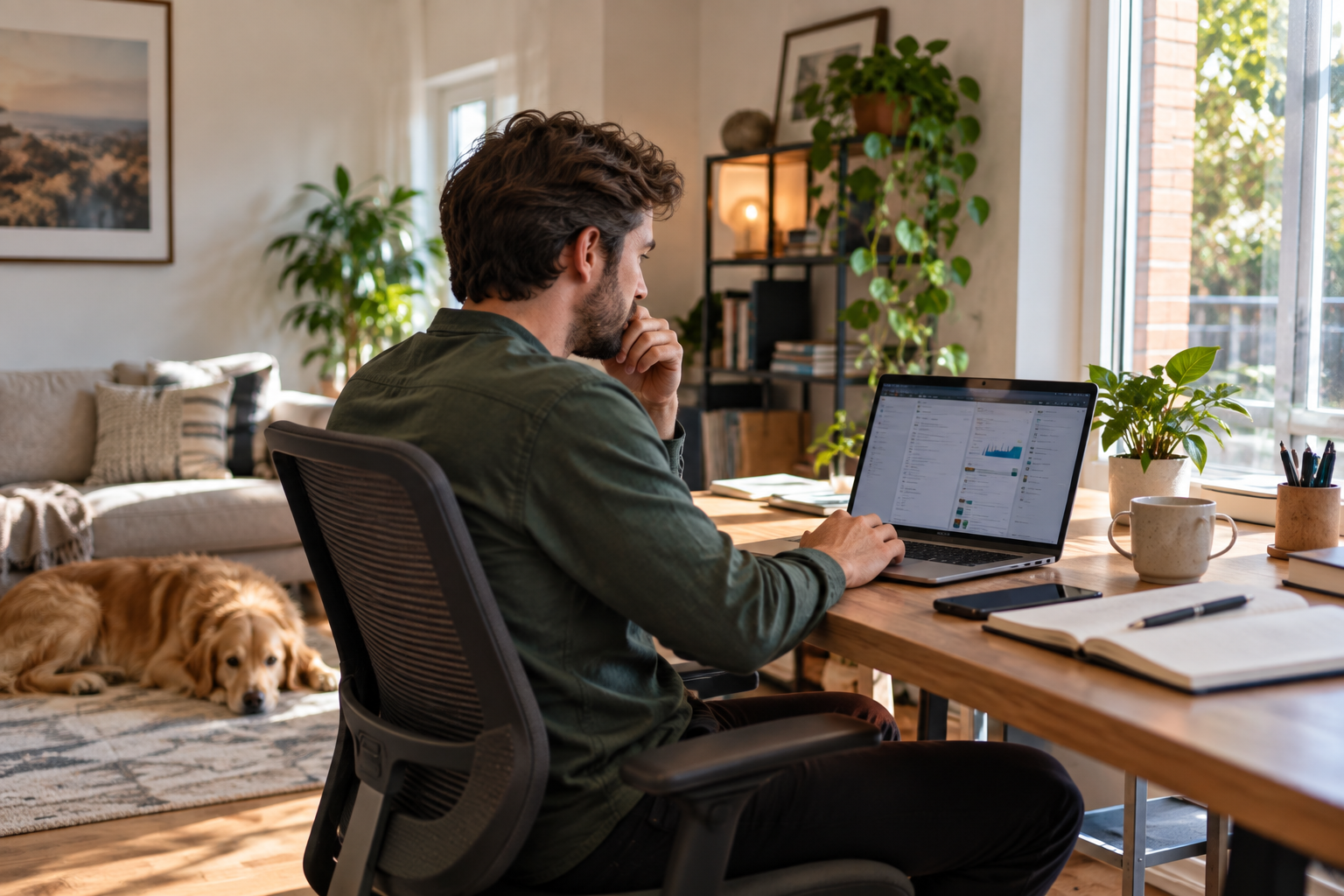
It is important to acknowledge that working from home works well for many people. For focused individual work, having a quiet home environment can be useful. Employees may save time on commuting and have greater control over their working day. For businesses, remote working can also widen the talent pool and reduce the need for a large permanent office. But flexibility does not automatically mean that working from home is the best option for everything. Think about the moments that happen naturally in an office. A quick conversation over coffee turns into a new idea. Someone asks a colleague for advice and solves a problem in five minutes. A junior employee overhears how a more experienced colleague approaches a client conversation. These moments are difficult to schedule. They are also difficult to replicate on a video call. This is where the benefits of working from the office become more noticeable.
The Benefits of Working From the Office

An office is not simply a place where people sit at desks. At its best, it becomes a shared environment where people work, learn and build relationships.
1. Better Collaboration
It is important to acknowledge that working from home works well for many people. For focused individual work, having a quiet home environment can be useful. Employees may save time on commuting and have greater control over their working day. For businesses, remote working can also widen the talent pool and reduce the need for a large permanent office. But flexibility does not automatically mean that working from home is the best option for everything.
Think about the moments that happen naturally in an office:
- A quick conversation over coffee turns into a new idea.
- Someone asks a colleague for advice and solves a problem in five minutes.
- A junior employee overhears how a more experienced colleague approaches a client conversation.
These moments are difficult to schedule. They are also difficult to replicate on a video call. This is where the benefits of working from the office become more noticeable.
2. Stronger Company Culture
Company culture can be difficult to build entirely remotely.
Culture is created through everyday interactions as much as formal policies. It is:
- The conversation before a meeting
- Grabbing lunch together
- Welcoming a new team member
- Celebrating a small win
An office gives those interactions somewhere to happen. For growing businesses, this can be particularly important. As teams become larger, maintaining a sense of connection becomes harder when everyone works independently from different locations. A shared workplace provides a physical point of connection.
3. Easier Learning and Mentoring
Not everything employees learn comes from a training session. A significant amount of workplace knowledge is picked up by watching, listening and asking questions. For someone early in their career, being around more experienced colleagues can make a real difference. They can observe how meetings are handled, how clients are approached and how problems are solved. Remote working can still support mentoring, but an office creates more opportunities for informal learning to happen naturally.
4. Better Separation Between Work and Home
One of the biggest advantages of working from home can also become one of its biggest challenges.
When your office is in your home, it can be difficult to switch off.
- The laptop is always nearby.
- The spare room becomes the meeting room.
- The kitchen table becomes the desk.
Having somewhere to go to work creates a physical boundary between professional and personal life. For some employees, that separation can support a healthier work-life balance and make it easier to finish the working day and properly disconnect.
5. More Opportunities for Networking
Some of the most useful professional relationships are built outside formal meetings.
- A conversation with someone from another business over coffee.
- An introduction from a colleague.
- A quick chat with a potential client after an event.
These opportunities are naturally more likely to happen when businesses share physical environments. This is particularly relevant in Dublin, where location can play an important role in professional networking. A central workspace can put employees closer to clients, partners, events, restaurants, cafés and other businesses.
Why Hybrid Working Can Offer the Best of Both Worlds
The answer does not have to be sending everyone back to the office five days a week. For many businesses, hybrid working offers a more sensible approach. Employees might work from home when they need uninterrupted concentration, then come into the office for team meetings, collaborative projects, client meetings or important planning sessions. The office becomes a destination for the work that benefits from being together. This changes what businesses should look for in a workplace. Instead of asking, "How many desks do we need?", companies can start asking:
"What does our team actually need from an office?"
The answer might be private spaces for focused work, meeting rooms for clients, comfortable breakout areas, places to collaborate and enough flexibility to accommodate a growing team.
7 Reasons Employees Still Benefit From Having an Office
1. Better Collaboration
Being physically together makes spontaneous conversations and collaborative work easier. Not every useful discussion needs a calendar invitation.
2. Stronger Company Culture
Shared experiences help teams develop relationships and create a sense of belonging that can be harder to maintain when everyone works remotely.
3. Easier Learning and Mentoring
Employees can learn from colleagues through everyday interactions, observation and informal conversations.
4. Better Work-Life Separation
Leaving the house to go to work creates a clearer boundary between professional responsibilities and personal time.
5. More Opportunities for Networking
A physical workplace can create opportunities to meet clients, partners, neighbouring businesses and other professionals.
6. A Professional Environment for Meetings
Not every client meeting belongs on a video call. Having access to well-designed meeting rooms provides a professional setting when face-to-face meetings matter.
7. A Shared Space for Business Growth
As a company grows, an office can become an important part of its identity. It provides a place for employees to come together and gives clients and potential employees somewhere to experience the business.
Why the Office Environment Matters
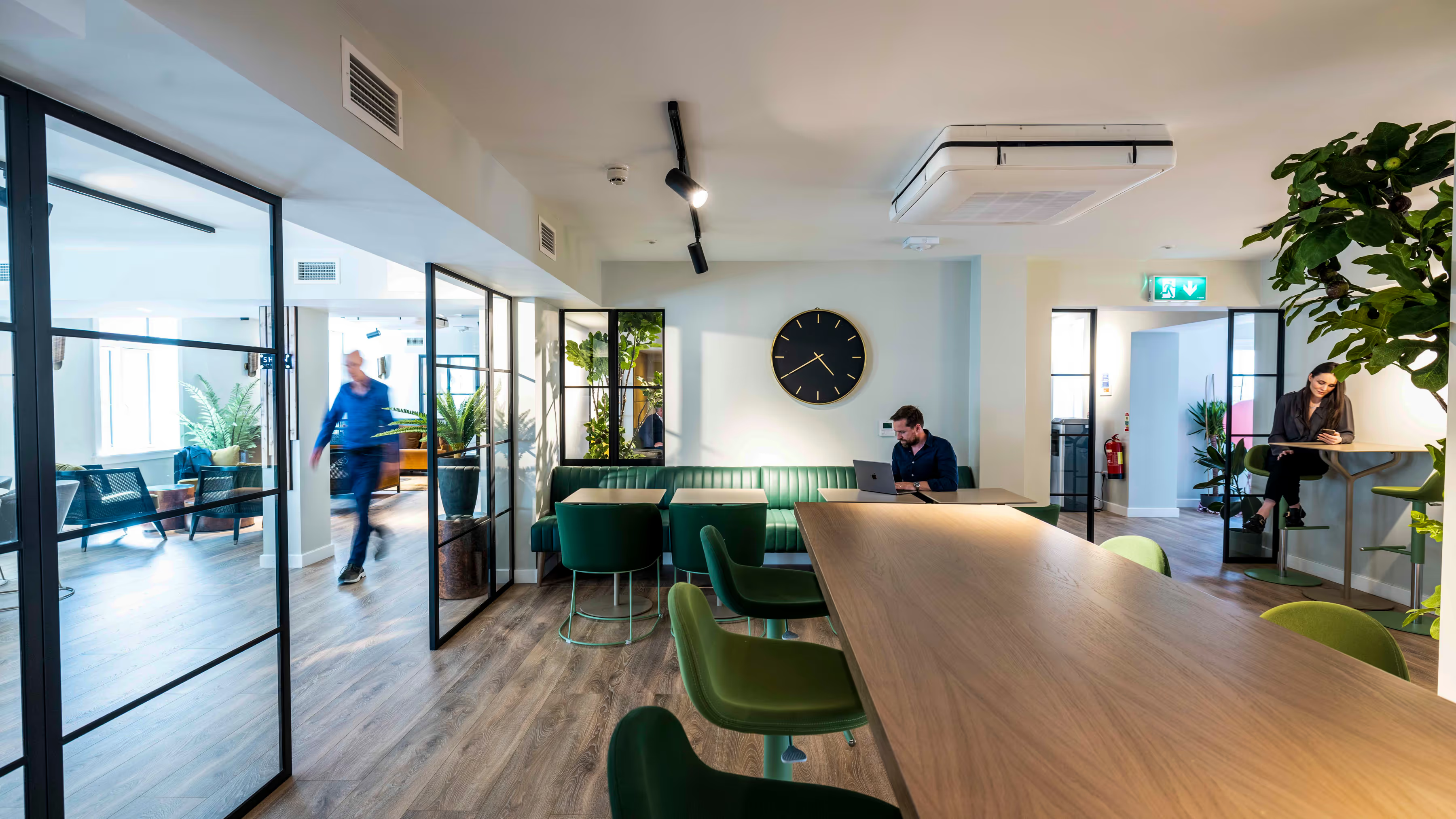
Of course, simply having an office does not automatically solve these challenges. The quality of the workplace matters. A cramped room with rows of desks may not provide much more value than working from home. Modern businesses increasingly need workplaces designed around different types of work. That could mean quiet areas for focused work, private offices for teams, comfortable meeting rooms, informal spaces for conversations and somewhere to take a break. Location matters too. For businesses considering office space in Dublin, a central location can make coming into the office considerably easier for employees and clients. Good public transport connections, nearby cafés and restaurants, and access to the wider city can all contribute to the experience. The office should make people's working lives easier, not harder.
What Should Businesses Look For in Office Space in Dublin?
The right workspace will look different for every company. A start-up with five employees may need something very different from an established business with 50 people. A consulting firm may prioritise meeting rooms, while a creative team might need more collaborative space. When comparing flexible office space in Dublin, businesses should consider:
- Location and accessibility
- Flexible terms
- Private offices
- Meeting and boardroom facilities
- Areas for collaboration
- Professional reception and shared spaces
- Internet and essential services
- Opportunities to scale as the team grows
- Nearby transport, cafés and amenities
This is where flexible workspace can offer an alternative to the traditional office model. Rather than taking a large space based on what a business might need several years from now, companies can choose a workplace that reflects where they are today while leaving room to grow.
Is Hybrid Working the Future?
It may not be useful to think about the future of work as one fixed model.
- Some businesses will remain fully remote.
- Some will want everyone together.
- Many will sit somewhere between the two.
The more important question is whether the working model suits the people and the business.
Hybrid working can provide flexibility without losing the benefits of having somewhere for people to meet and work together.
- For employees, that can mean choosing where they work based on the task at hand.
- For businesses, it can mean having a professional workplace without expecting employees to be there every day.
- For growing companies, it can provide a practical balance between flexibility, culture and business needs.
Office vs Home Isn't Really the Question
The debate around remote working can sometimes become too black and white. The choice does not have to be office or home. For many businesses, the better question is:
When does our team work better together and what kind of workplace makes that possible?
Working from home has its place. So does working from an office. A well-designed hybrid approach can bring the two together, giving employees flexibility while maintaining the collaboration, culture, relationships and professional environment that a physical workplace can provide. For businesses exploring office space in Dublin, that could mean looking beyond the traditional idea of what an office needs to be. The best workplace may simply be one that gives your team the right space, at the right time, without unnecessary commitment.
Frequently Asked Questions
Is working from an office better than working from home?
Not necessarily for every person or every type of work. Working from home can be excellent for focused tasks, while an office can be more effective for collaboration, mentoring, meetings and team connection. A hybrid approach can combine both.
What are the benefits of hybrid working?
Hybrid working gives employees flexibility while allowing businesses to maintain a shared workplace. It can support collaboration, company culture, employee wellbeing and face-to-face relationships without requiring employees to work from the office every day.
Why do companies still need offices?
Offices can provide a place for teams to collaborate, meet clients, build relationships and develop company culture. They can also provide a professional environment that is difficult to replicate when everyone works remotely.
What should I look for when choosing office space in Dublin?
Consider location, accessibility, flexibility, private offices, meeting facilities, workspace design, amenities and whether the space can accommodate future growth.
Is flexible office space suitable for small businesses?
Yes. Flexible workspace can allow smaller businesses to access professional offices and facilities without taking on the space and commitment associated with a traditional lease.
What is the difference between a serviced office and a traditional office lease?
A traditional lease generally involves a longer-term commitment and greater responsibility for managing the premises. Serviced and flexible offices typically bundle facilities and services into a simpler arrangement, with greater flexibility around space and terms.
Final Thought
The future of work is unlikely to be defined by one universal approach. For some people, home will remain the best place to focus. For others, being around colleagues is essential. For many businesses, the answer will be a combination of both. The goal is not simply to get people back into an office. It is to create a workplace that gives people a reason to come in. And when the office is accessible, comfortable, professional and flexible enough to support the way modern teams actually work, it can become much more than a place to sit at a desk.