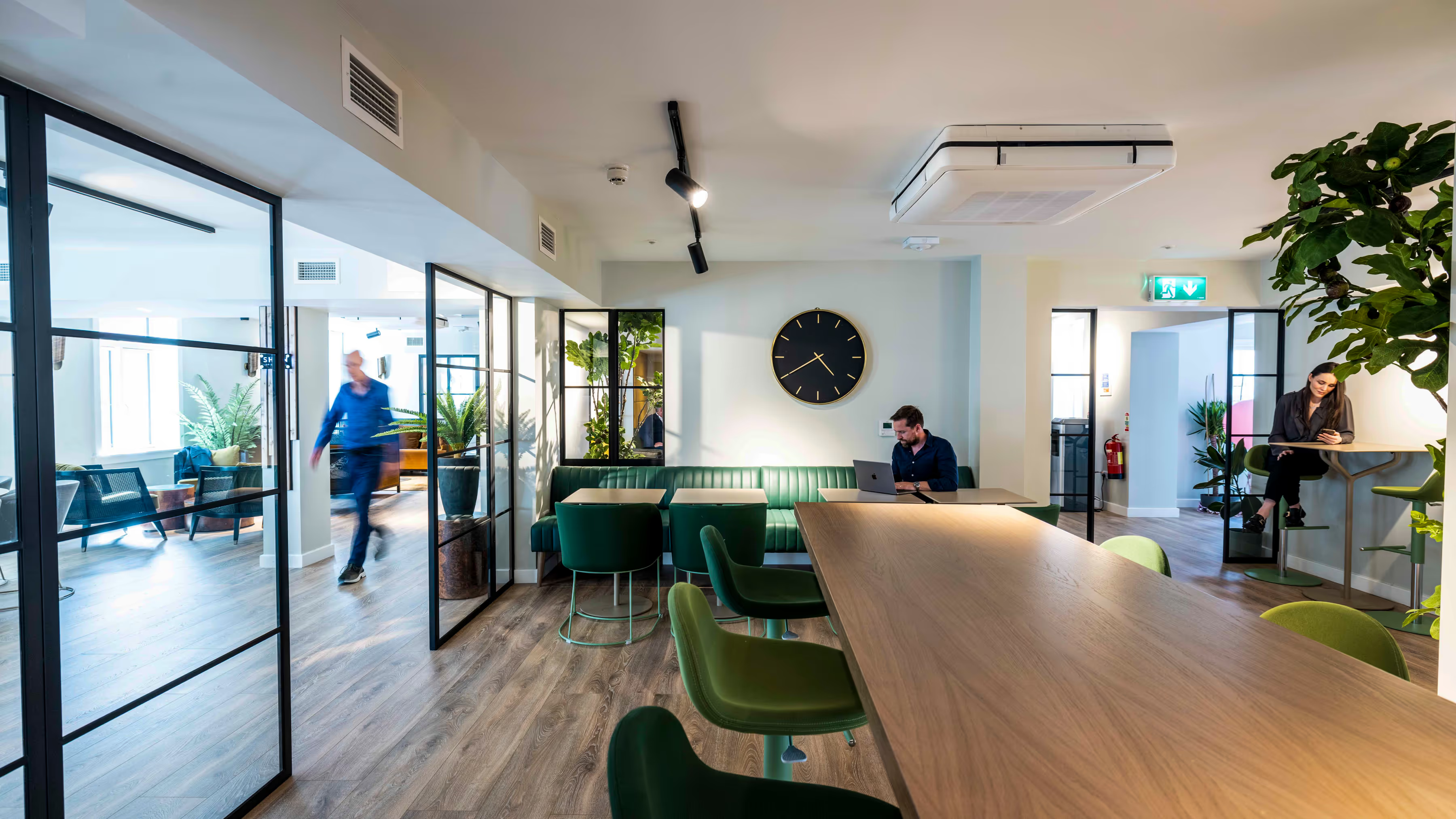

Finding office space in Dublin used to mean one thing: a long lease, a fit-out budget and a pile of paperwork. Now there are more options, which also means more ways to get it wrong. Take too much space and you're paying for empty desks. Pick the wrong location and your team starts dreading the commute. Sign the wrong agreement and you're locked in when your plans change.
This guide covers the main types of office space in Dublin, what to budget beyond the rent, how to choose an area and what to check before you sign.
What types of office space are available in Dublin?
Most businesses end up choosing between four models.
Traditional lease. You rent a whole floor or building directly from a landlord, usually on a multi-year term. You get full control over layout and branding, but you also take on the fit-out, furniture, utilities, insurance and maintenance.
Serviced office. A fully furnished, ready-to-use private office run by an operator. Reception, cleaning, internet and utilities are typically bundled into one monthly fee.
Flexible office space. A broader term that covers serviced offices and shorter agreements. The point is adaptability: you can usually add desks, scale down or move on without waiting out a long lease.
Coworking or virtual office. Coworking gives you a desk in a shared space. A virtual office gives you a business address, mail handling and access to meeting rooms without a permanent desk.
Serviced office vs traditional office lease
This is the decision that trips up most growing companies, so it's worth being honest about the trade-offs.
A traditional lease can make sense when you have a large, stable team, specific build requirements and confidence about where you'll be in five or ten years. It often looks cheaper per square foot on paper.
The catch is everything that sits outside the rent: fit-out, furniture, IT setup, service charges, rates, insurance and the time it takes to find, negotiate and move in. Add a long commitment and the real cost and risk are higher than the headline number suggests.
A serviced office flips that. You pay more per square foot but far less in upfront cost and you can be working within days rather than months. For startups, scaling teams and companies opening a Dublin base for the first time, that speed and flexibility is often worth the premium.
Private office vs shared office
If your team handles confidential work, takes a lot of calls or needs somewhere clients can visit, a private office is usually the better fit. You get a lockable space, your own branding if you want it and a team environment you control.
A shared or coworking space works well for freelancers, solo founders and very small teams who want a professional setting without the commitment. The trade-off is less privacy and less control over noise.
Many businesses start in one and move to the other. The useful question to ask any provider is how easy it is to switch as you grow.
What's included in a serviced office?
Inclusions vary, so read the list carefully. A good serviced office in Dublin will usually cover:
- Furnished private office space
- High-speed internet
- Reception and visitor handling
- Utilities, heating and cleaning
- Access to meeting rooms
- Phone booths and breakout areas
- Tea, coffee and kitchen facilities
Then ask what isn't included. Meeting room hours, printing, parking, storage and extra desks are common add-ons. None of these are dealbreakers, but they should be in your budget before you compare quotes.
What additional costs should you consider?
.jpg)
Whichever route you take, build the full picture before you decide:
- Fit-out and furniture if you're leasing traditionally
- Service charges, rates and insurance on top of rent
- IT and telecoms setup
- Deposits and notice periods
- Exit costs, such as reinstatement obligations at the end of a lease
- Meeting room and add-on fees in a serviced office
Comparing a single monthly figure from a serviced office against a bare rent figure from a landlord is the easiest way to misjudge the real cost. Put both on a like-for-like annual basis.
Which Dublin location is right for your business?
Location shapes everything from hiring to client impressions, so it deserves more than a quick look at price.
Dublin 2 is the traditional centre of Dublin's professional world. Law firms, financial services, tech companies and consultancies cluster around St Stephen's Green, Merrion Square and Fitzwilliam Square. You get easy access to Luas, DART, Dublin Bus and Pearse Street station, plus plenty of places to meet clients for lunch or coffee.
Other Dublin business districts have their own appeal. The Docklands suit larger tech and finance teams who want modern towers. Ballsbridge and Dublin 4 offer a quieter, more residential feel with strong embassy and professional-services presence. Suburban business parks can mean cheaper rent and parking, but they trade away the walkability and the talent pool of the city centre.
The right choice usually comes down to where your team lives, where your clients are and what impression you want your address to give.
Why Dublin 2 is attractive for businesses
For many companies, a Dublin 2 address does quiet work in the background. It signals credibility to clients and investors, makes recruiting easier because people can reach it from almost anywhere in the city and puts your team close to restaurants, gyms and cafés that make the working day more pleasant. The Georgian streets around Fitzwilliam Square and Mount Street are particularly sought after for exactly this reason.
How much office space does your team actually need?
A common rule of thumb is to allow for the people who will be in the office on a typical day, not your total headcount. With hybrid working now standard, many teams over-rent by planning for everyone being in at once.
Think about:
- How many people are in on your busiest day
- Whether you need dedicated desks or can hot-desk
- How much meeting space you need versus how often you'd use it
- How quickly you expect to grow in the next 12 months
If your headcount is likely to change, favour a flexible agreement over a space you'll either outgrow or rattle around in.
Office space for startups vs established businesses
Startups and growing companies usually benefit most from flexibility. You can start with a few desks add more as you hire and avoid tying up cash in fit-out. Speed matters too: being able to move in within days can be the difference between hitting a hiring plan and missing it.
Established businesses and HQs often want something different: privacy, brand presence, a consistent address and room for a leadership team. Many now use flexible offices for satellite teams, project hubs or a first Irish base, while keeping a larger lease elsewhere.
A checklist before you sign
Before committing to any office agreement in Dublin, check the following:
- Term and notice period. How long are you committed, and what does leaving cost?
- What's included. Get the full list in writing.
- Price changes. Can the rate rise during your term?
- Scalability. Can you add or reduce desks easily?
- Access. Is the building available 24/7, or only in set hours?
- Meeting rooms. How many hours are included, and how easy is booking?
- Internet and security. Is the connection dedicated, and who has access to the building?
- Commute. Test the journey at rush hour, not on a quiet Saturday.
- Move-in time. How soon can you realistically start?
- Viewing. See the exact office you'll be given, not a show suite.
Meeting rooms, reception and the small things
It's easy to focus on desks and rent and forget the spaces that shape daily life. A good reception creates a professional first impression without you needing to hire anyone. Meeting rooms mean you aren't hosting clients next to your desk. Phone booths and breakout areas make calls and focused work easier. These details rarely show up in a price comparison, but they're what your team notices every day.
Where Pembr fits
Pembr offers private offices, flexible office space, meeting rooms and virtual office services in the heart of Dublin 2. It's a good fit if you want a premium address, a fully furnished space and the freedom to adjust as your business changes.
If you're weighing up your options, the best next step is to see a space in person. Schedule a viewing at Pembr and compare it against everything on the checklist above.